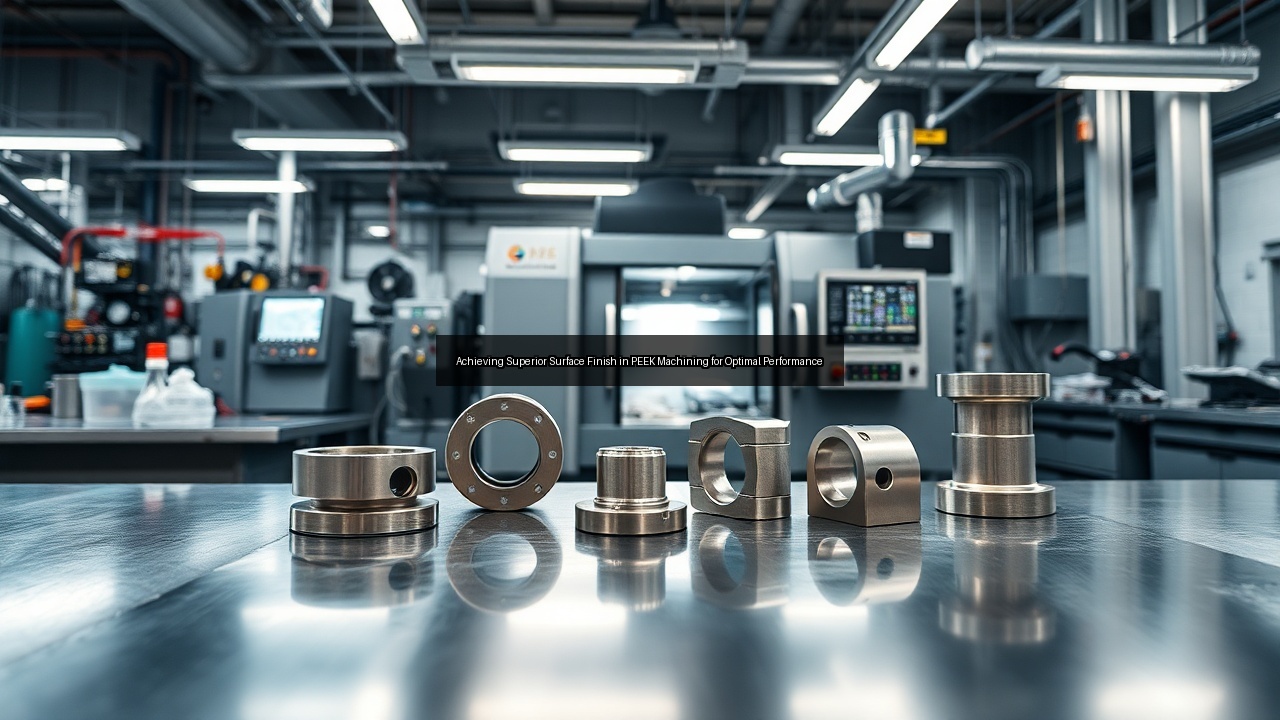
Achieving Superior Surface Finish in PEEK Machining for Optimal Performance
Understanding PEEK and Its Applications
Overview of Polyether Ether Ketone (PEEK)
Polyether ether ketone (PEEK) stands out as a high-performance engineering plastic known for its exceptional mechanical properties and thermal stability. This semi-crystalline thermoplastic polymer exhibits excellent resistance to chemicals, making it suitable for demanding environments. PEEK retains its strength and rigidity even at elevated temperatures, reaching up to 260°C (500°F). This material's unique combination of lightweight characteristics and robust performance makes it a preferred choice in industries ranging from aerospace to medical applications. Its versatility allows for the production of PEEK machined parts that meet stringent requirements for durability and reliability.
Advantages of PEEK in Engineering Applications
PEEK offers numerous advantages that make it an attractive option for engineers. First, its high strength-to-weight ratio allows for the design of lightweight components without sacrificing performance. Second, PEEK’s excellent wear and abrasion resistance extend the lifespan of machined parts, reducing the need for frequent replacements. Moreover, PEEK exhibits low moisture absorption and high dimensional stability, ensuring that machined PEEK parts maintain their integrity in various conditions. Its biocompatibility further enhances its suitability for medical implants and devices, where safety and efficacy are paramount. Overall, the benefits of PEEK make it a go-to material for engineers looking to push the limits of performance in their designs.
Common Applications of PEEK Machined Parts
Machined PEEK parts find applications across a wide range of industries. In the aerospace sector, PEEK components are used in fuel systems, valves, and other critical parts due to their lightweight nature and thermal resistance. The automotive industry utilizes PEEK for various components such as bearings and seals, where high wear resistance is essential. In the medical field, PEEK serves as a material for surgical instruments and implantable devices, capitalizing on its biocompatibility and strength. Additionally, PEEK's utility extends to electronics, where it is used in insulating components and connectors. These diverse applications underscore the material's adaptability and underscore the importance of achieving superior surface finish in PEEK machining to ensure optimal performance.
Machining Processes for Superior Surface Finish
CNC Machining Techniques for PEEK
CNC machining provides precise control over the fabrication of PEEK parts, allowing for intricate designs and tight tolerances. The use of computer numerical control (CNC) machines ensures that every cut and contour adheres to exact specifications. Techniques such as CNC milling and turning are machining in PEEK particularly beneficial for machining PEEK, as they reduce the risk of thermal deformation that could compromise the material’s integrity. Operators must select appropriate feed rates and spindle speeds to minimize heat generation during the cutting process. Moreover, employing proper coolant strategies can help maintain optimal temperatures, thus preserving the advantageous properties of PEEK while achieving a superior surface finish.
Best Practices in CNC Milling of PEEK
When CNC milling PEEK, several best practices ensure high-quality results. First, selecting the right cutting tools is critical; carbide tools with sharp cutting edges are preferable to minimize tool wear and improve surface finish. Second, maintaining a low cutting speed and a high feed rate can prevent overheating, which is essential when machining this thermoplastic. Third, using specialized PEEK milling strategies, such as climb milling, can enhance surface quality by improving chip removal and reducing burr formation. Finally, regular monitoring of the machining process allows operators to make real-time adjustments, ensuring consistent quality across all machined PEEK parts. Implementing these best practices leads to efficient machining processes that yield high-quality components.
Importance of Tool Selection and Fixture Design
Tool selection plays a pivotal role in the success of PEEK machining. Choosing the right tool geometry and material directly affects the efficiency and accuracy of the machining process. High-speed steel (HSS) or carbide tools offer the necessary hardness and wear resistance for machining PEEK. Additionally, fixture design must provide stability and support throughout the machining operation. A well-designed fixture ensures that the PEEK part remains securely in place, preventing vibrations that could lead to inaccurate cuts and poor surface finish. Both tool selection and fixture design are crucial for achieving the desired outcomes in CNC machined PEEK parts, emphasizing the need for careful planning and execution in the machining setup.
Achieving Optimal Surface Finish in PEEK Machining
Factors Affecting Surface Finish in PEEK
Several factors influence the surface finish of machined PEEK parts. The choice of cutting tools, the speed and feed rates, and the cooling methods employed all play significant roles. For instance, inadequate cooling can lead to thermal degradation of the material, resulting in a rough surface. Conversely, using tools that are too dull can cause excessive friction, leading to poor finish quality. Furthermore, the machining strategy, whether conventional or climb milling, impacts the final surface characteristics. Understanding these factors allows machinists to make informed decisions that enhance the surface finish of PEEK machined parts, ultimately contributing to better performance in their intended applications.
Tool Wear and Its Impact on Machined Parts
Tool wear significantly affects the quality of machined PEEK parts. As tools wear down, they generate more heat and produce rougher surfaces, leading to compromised performance. Monitoring tool wear is essential for maintaining the integrity of the machining process. Implementing regular inspections and utilizing predictive maintenance can help identify when tools need replacement or sharpening. Additionally, using coatings on cutting tools can reduce wear rates, enhancing longevity and maintaining surface quality. By addressing tool wear proactively, manufacturers ensure that their machined PEEK parts meet the stringent quality requirements necessary for high-performance applications.
Cost Considerations in Machining PEEK
While PEEK offers unmatched performance characteristics, its machining can be more costly than traditional plastics. The high cost of raw PEEK material, combined with the specialized tooling and advanced machining processes required, contributes to the overall expense. However, investing in high-quality machining techniques can yield long-term savings by reducing scrap rates and minimizing rework. Manufacturers must consider the total cost of ownership, including factors like tool life, production efficiency, and quality control measures. By applying effective machining strategies, companies can balance the higher initial costs of PEEK machining with the benefits of superior performance and durability in their finished parts.
Tolerance and Quality Control in PEEK Machining
Understanding Tolerances for PEEK Machined Parts
Tolerances in PEEK machined parts are critical for ensuring that components fit and function correctly in their intended applications. Tight tolerances often define high-performance components, especially in industries such as aerospace and medical. Understanding the specific tolerances required for each application allows engineers to design parts that meet rigorous standards. Proper machining techniques and quality control measures help achieve these tolerances, ensuring that the machined PEEK parts perform reliably under stress. Attention to detail in the machining process directly correlates with the success of the final product, making tolerance management essential.
Quality Control Measures in PEEK Machining
Quality control in PEEK machining encompasses various techniques to ensure that every machined part meets specifications. Employing statistical process control (SPC) can monitor machining processes in real-time, identifying deviations before they lead to defects. Visual inspections, surface roughness measurements, and dimensional checks are standard practices that help validate the quality of machined PEEK parts. Additionally, implementing ISO standards can create a framework for quality assurance, promoting consistent production practices. Rigorous quality control not only assures compliance with industry standards but also enhances customer confidence in the reliability of PEEK machined parts.
Future Trends in PEEK Machined Part Production
The future of PEEK machined part production looks promising, driven by advancements in technology and materials science. Innovations in CNC machining and additive manufacturing are poised to revolutionize how PEEK parts are produced. For instance, integrating artificial intelligence (AI) can optimize machining parameters in real-time, improving efficiency and surface finish. Additionally, the development of new PEEK machining in PEEK formulations with enhanced properties could expand the scope of applications. As industries increasingly prioritize sustainability, exploring recycling options for PEEK and machining in PEEK other engineering plastics will become crucial. These trends signal a dynamic future for PEEK machining, where performance and efficiency continue to evolve.